

When Rice University faculty launched America Through Foreign Eyes on Coursera in 2015, they built it for a global classroom. Ten years later, over 20,000 learners from around the world have enrolled — a milestone that the faculty and course staff say feels both validating and urgent, just as the United States marks its 250th anniversary.
The free course examines how France, Mexico, China, Africa, and Russia have perceived the United States through history and into the present. It draws from sociology, anthropology, history, political science, art history, cinema, archaeology, and literature. It is not a course about anti-Americanism or pro-Americanism. It is, as Professor Julie Fette describes it, a course about cross-cultural understanding.
“If you want to understand America, you have to open your eyes,” Fette said, “and this is true for people of all nationalities, including Americans.”
A Milestone Ten Years in the Making
For the Rice faculty who built the course, the milestone carries weight that goes beyond enrollment. “20,000 students are probably more students than I've ever taught in my entire career in person,” said Professor Jeffrey Fleisher, who leads the Africa module.
Dr. Anne Chao, who leads the China module, shared a similar sense of scale. “I think it's amazing that my teaching can reach 20,000 people,” she said. “I am totally astounded that this can happen.”

For Emma Belnap, a Rice graduate student serving as teaching assistant, the milestone speaks to something beyond numbers. She monitors the course discussion forums and sees the relevance of the material play out in real time.
“The questions that we're asking are even more pertinent now than they were when the course was launched in 2015,” Belnap said. “As the world continues to change, as America's place in the world continues to realign within different political systems and economic systems, we continually need to reflect on what role America is playing.”
Five Perspectives, Five Rice Faculty
The course is built around five regional modules, each taught by a Rice faculty specialist. Together they cover perspectives that span history, culture, politics, and intellectual life across four continents.
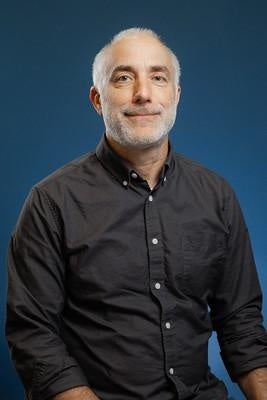
Dr. Jeffrey Fleisher, Professor of Anthropology, leads America Through African Eyes. His module is the only one in the course focused on a continent rather than a single country. The module traces how African perceptions of the United States differ across regions and across time. One of the module's most striking histories involves Ghana's first president, Kwame Nkrumah, who studied in the United States in the 1940s and '50s and brought what he witnessed back to Africa's independence movement.
“The fight for racial rights in the United States in the '40s and '50s was a key beacon for a lot of anti-colonial fighters in Africa,” Fleisher said.
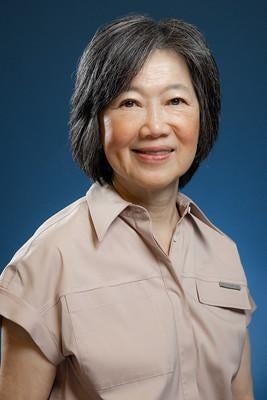
Dr. Anne Chao, Adjunct Lecturer in History, leads America Through Chinese Eyes. Her module traces more than a century of shifting Chinese perceptions — moving from early hostility, through a period of deep admiration and Cold War estrangement, into the complex present.
“Most of the time, the people of China have a positive and affectionate view of America, but not always the government,” Chao said. “However, their attitude toward America shifts depending on their own historical and cultural position of the moment.”
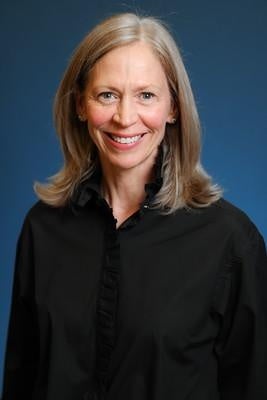
Dr. Julie Fette, Professor of French Studies, leads America Through French Eyes and serves as course guide. Her module explores the long, complicated, and often contradictory relationship between France and the United States — a relationship she describes simply:
“The United States and France are like a romantic couple. We may bicker, and we may hurt each other, but we help each other through revolutions, and we care intensely about what the other thinks of us.”
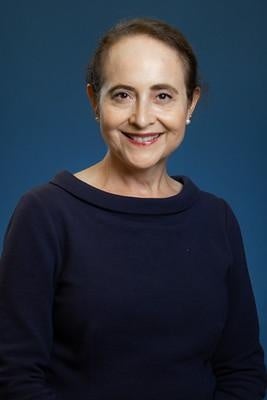
Dr. Moramay López-Alonso, Associate Professor of History, leads America Through Mexican Eyes. Her module traces how geography, migration, economics, and shared — and contested — history shape the way Mexicans see the United States.
“There is a lot of narrative from American news and media on how America views itself and how it wants to present itself to the rest of the world,” she said. “But sometimes it misses another point of view, another stance, the stance of people who are looking at America through the lens of their own history and the history of the relationship between the said country and the United States.”
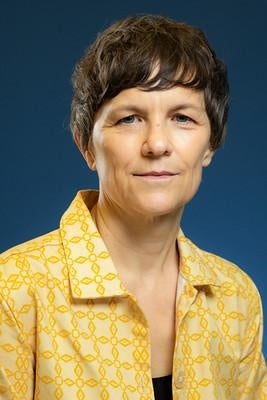
Dr. Lida Oukaderova, Associate Professor of Art History, leads America Through Russian Eyes. Her module spans 150 years of Russian and Soviet perception of the United States, moving from the Soviet fascination with American industrial methods and Hollywood cinema in the 1920s and '30s, to the Cuban Missile Crisis, to the waves of Soviet Jewish immigration that shaped Brighton Beach.
“In Russia, the United States is a constant nemesis and occasional friend, and the relations between [the] two countries have a very rich history,” Oukaderova said.
A concluding module, Reversing the Gaze, brings all five professors together in various Houston restaurants for informal conversations about what Americans have historically said and thought about Africa, China, France, Mexico, and Russia.
Why a Global Audience Keeps Enrolling
The course was built knowing it would attract learners far beyond the United States — and that has proven true across every cohort. Students have enrolled from Colombia, Kenya, Sudan, India, and dozens of other countries, each arriving with a different relationship to the subject.
López-Alonso attributes the broad reach of the course to something fundamental:
“It resonates with a global audience because it's the United States, and there's always this curiosity to see how other parts of the world view the United States. Every learner will have [their] own relationship with the United States and how they view the United States, because the United States is pretty much omnipresent because of its importance in the world scene.”
The learner feedback reflects that pull. A high school geography teacher in Texas wrote after completing the course:
“I believe that this class has opened my eyes to how important it is to try not only to see our culture through our own perceptions, but to try to get an introspective view through those of foreigners. We do so much to teach our students American views that often we forget that not everyone in the world sees the same way we do.”
What the Course Gives Learners
The course is structured around what the faculty call the “double mirror” — the idea that when a foreign observer critiques America, that critique reflects as much about their own culture, history, and anxieties as it does about the United States. Students don't simply learn how others see America; they examine why those perceptions formed and what they reveal about both sides.
Fleisher, whose work as an archeologist shapes how he thinks about the course, describes this as the thread connecting every module.
“What's unique about this course is the range of perspectives that you have on America. It allows students to think about the way in which history and geography and capitalism and power shape the way in which the world thinks about the United States.”
Oukaderova sees the same quality as the course's defining strength:
“These transnational perspectives open a vast space for self-reflection, and that's what's great about this course.”
Belnap describes the discussion forum question that consistently draws the most thoughtful responses: one that asks learners to imagine the experience of Sudanese refugees settling in the United States, and then invites non-American students to consider what an outsider would face trying to assimilate into their own country.
“And for me, it feels like the first moment of the course where you can really see students getting out of their own perspective, getting out of their own bubbles to really put themselves in someone else's shoes,” she said.
Why the Moment Matters
The timing of this milestone is not lost on the faculty who built the course. Fette has said that the kind of intercultural understanding the course offers feels more necessary now than it has in years, as America's role in global affairs is shifting radically.
Fleisher shares that sense of urgency: he describes this as a period of real change in how the United States engages with the rest of the world, the kind of change that students and historians alike will spend years interpreting.
Chao sees practical value in that uncertainty — she believes students who understand the historical roots of America's relationships with other nations are better equipped to make sense of new developments as they unfold.
As the United States marks 250 years since its founding, that kind of grounding feels especially relevant. The course does not offer a single verdict on what America has meant to the world. It offers five different perspectives, each shaped by a different history and a different vantage point. For López-Alonso, that range is the whole purpose.
“If 20,000 more people take this course,” she said, “the world will become a world where there will be better understanding of the relationships across countries.”
Enroll in America Through Foreign Eyes
America Through Foreign Eyes is free and available now on Coursera. The course covers five regional perspectives and is open to learners of any background or nationality.
Enroll on Coursera Learn More at Rice Online