


New semester, fresh start. If you’re ready to make your study time actually work and reach your learning goals, Rice’s Practical Metacognition for Learning on Coursera is a quick, hands-on way to level up how you learn—so you can spend less time rereading and more time understanding. In this guide, you’ll get five science-backed strategies and a simple weekly plan you can start this week.
In learning science, metacognition means monitoring and adjusting your own thinking as you learn (Flavell, 1979).
The routines below align with well-supported study findings on practice testing (active recall) and spaced practice, which consistently outperform rereading and last-minute cramming for long-term retention (Roediger & Karpicke, 2006; Cepeda et al., 2006; Dunlosky et al., 2013).
This course turns proven learning science into simple routines you can plug into your week right away—think clearer notes, genuinely better recall, and less last-minute cramming.
Explore the Course: Practical Metacognition for Learning (Rice Online Learning)
Explore the course: Practical Metacognition for Learning via Coursera for Rice
Why Practical Metacognition Matters at Rice
Rice classes progress quickly. Metacognition—often described as “thinking about your thinking”—is the evidence-based skill of monitoring what you understand and changing your approach when you don’t (Flavell, 1979). With a few small habits, you’ll connect ideas across lectures, labs, and problem sets, retain more between classes, and feel confident heading into quizzes and exams.
Jared Stenson, assistant teaching professor of physics and astronomy at Rice University and one of the instructors for Rice’s Practical Metacognition for Learning course on Coursera, puts it simply:
“Metacognition… just means thinking about how you think… how do we remember things? How do we process things?”
Watch (30 seconds): Jared Stenson discusses “What is metacognition?”
Try These 5 Science-Backed Strategies to Study Smarter

Strategy 1: Mind Mapping Your Syllabus To See The “Big Picture” Faster
(15 minutes per course)
Turn each syllabus into a quick mind map: core themes in the middle, units branching out, then key terms, equations, or readings. You’ll see the “big picture” faster—and know what to prioritize. Research on concept/knowledge mapping shows that organizing ideas into connected relationships can improve learning and understanding across many subjects (Nesbit & Adesope, 2006).

Strategy 2: Spaced Practice To Stop Cramming And Remember More
After each lecture, do a short, next-day recall quiz from memory (no notes), then review again 3–4 days later. Add those touchpoints to your calendar now for Weeks 1–3. Short, spaced reviews beat marathon sessions. This “spacing effect” is supported by large research syntheses showing that distributed (spaced) practice improves later recall compared with massed practice (Cepeda et al., 2006). And quick, low-stakes self-quizzing works because retrieving information strengthens memory (Roediger & Karpicke, 2006).

Strategy 3: Active Recall: Turn Class Notes Into Quiz Questions
Rewrite key points into why / how / what if questions. Example: “Why does this theorem matter?” “How would I apply it to a new problem?” “What if the assumption shifts?” Next, respond to them verbally or with a study partner. Turning notes into “why/how” questions is a form of elaborative interrogation and self-explanation, strategies reviewed in learning-science research on what actually improves student learning (Dunlosky et al., 2013).

Strategy 4: Chunking: Group Big Ideas So You Can Rebuild Them From Memory
Group related concepts into meaningful “chunks” (e.g., one mechanism, one proof, one case). Label each chunk with a short phrase you can remember. When you assess your knowledge, attempt to recreate the chunk entirely. In cognitive psychology, chunking (recoding smaller bits into larger, meaningful units) can reduce working-memory load and support recall—especially when the chunks are familiar and well-labeled (Thalmann et al., 2019).

Strategy 5: Sleep And Exercise To Support Memory And Focus
Sleep is consistently linked to memory consolidation—one reason consistent sleep can make study time “stick” better (Diekelmann & Born, 2010). And even brief bouts of exercise can support aspects of cognitive performance; a recent systematic review/meta-analysis found acute exercise can modestly improve episodic memory, depending on timing and intensity (Qazi et al., 2024). Treat these like non-negotiable study tools.
Use This Simple Cycle To Make The Information Stick
Tips for Building Community in Your Online Degree Program
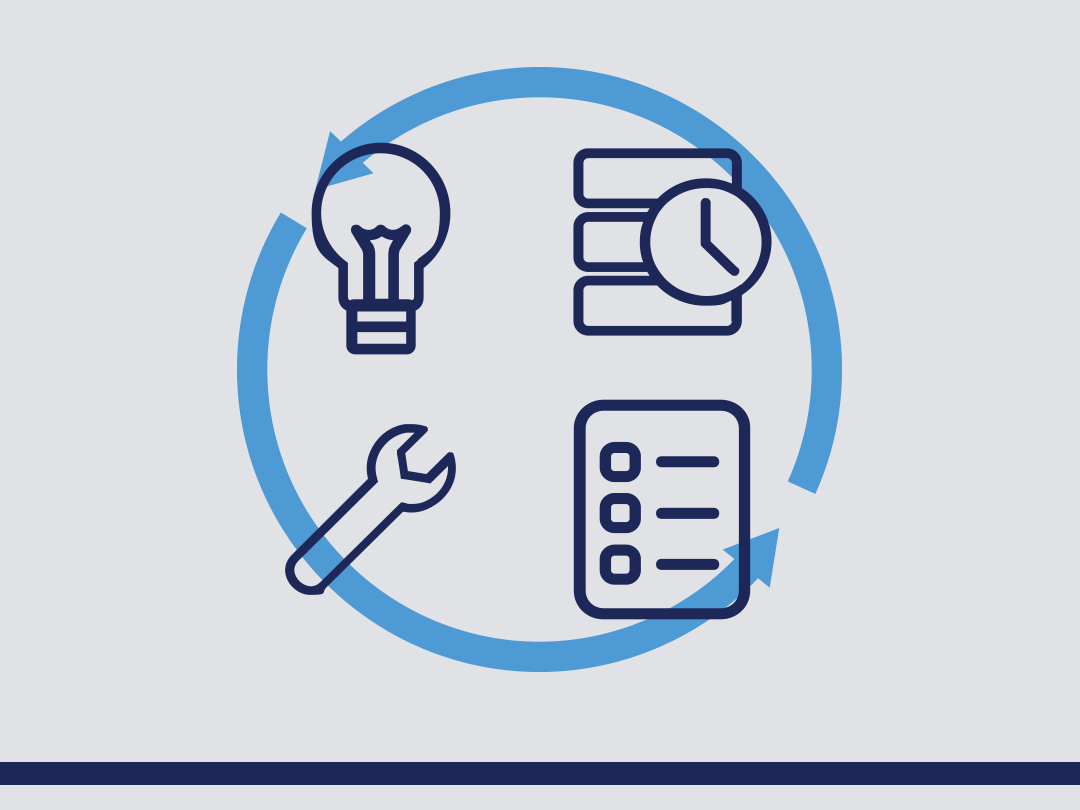
Use this loop each week:
- Plan
Set two or three concrete learning goals for each class.
- Do
Study in focused blocks (25–45 minutes) with quick breaks.
- Check
Conduct a self-assessment and revise your mind map.
- Adjust
Adjust your strategy according to what didn’t work—then try again.
This kind of weekly “plan–do–check–adjust” routine aligns with research on self-regulated learning, where students set goals, monitor progress, and adapt strategies over time (Zimmerman, 2002).
Quick myth check: A lot of people have been taught that they have a single “learning style” (visual, auditory, or kinesthetic). In the video clip below, Vamsi Makineni—a senior Rice University undergraduate studying physics and philosophy and a co-instructor for Rice’s Practical Metacognition for Learning course— pushes back on that idea:
“One popular neuromyth about studying… is that we have different learning styles… but that’s merely a myth. There’s no research backing this up.”
Instead, the goal is to use multiple approaches—seeing, explaining, and doing—to strengthen understanding and recall.
Watch (30 seconds): Vamsi Makineni discusses “Why learning styles are a neuromyth.”
Use AI Tools Supported Through Rice For Free With Your NetID

Rice students now have institution-provided access to Google’s Gemini and NotebookLM—no extra cost—by signing in with your Rice NetID (SSO). These tools were rolled out as part of Rice’s 2025 AI initiative and are designed to be FERPA-compliant for academic use.
How To Use These AI Tools At Rice:
-
Plan smarter: Turn a syllabus or lecture slides into study questions and a weekly plan in Gemini.
-
Make notes work harder: Upload class notes/readings to NotebookLM to generate outlines, concept maps, and quiz questions for spaced review.
How To Sign In To Gemini or NotebookLM With Your NetID:
-
Open Gemini or NotebookLM in your browser.
-
Choose “Sign in with Rice University” (WebSSO).
-
Use your NetID to authenticate. (Rice SSO shares basic attributes—NetID, name, @rice.edu—only to operate the service.) Rice Knowledge Base
Note: Google also ran limited-time student promos (e.g., AI Pro/One AI Premium). Your Rice-provided access is the one to use for coursework; promo terms can vary and often require a personal Gmail.
Learn For Free with Coursera For Rice
Rice students get no-cost access to 80+ Rice-taught courses on Coursera through Coursera for Rice. That means you can fully participate in courses (graded assignments, discussion forums) and earn shareable certificates—without paying a cent.
How To Enroll in Coursera for Rice:
-
Go to Coursera for Rice and select Join. Online Learning | Rice University
-
Choose “Log in with Rice University” and follow the prompts using your @rice.edu credentials. (SSO.) Online Learning | Rice University
-
In the Rice University Collection, search for Practical Metacognition for Learning and click Enroll for Free.
Good to know: Coursera for Rice access is for current students, faculty, and staff. Courses are non-credit, but you can earn Coursera certificates upon successful completion. Many are designed to be completed in 4–6 weeks at ~3–6 hours/week.
What You Will Get From The Practical Metacognition Course
-
A repeatable study system you can adapt to any subject
-
Guided activities (mind maps, chunking, spaced-review plans)
-
Fast reflection prompts to spot what’s working (and what isn’t)
-
Practical tips you can use the same day you watch
Perfect for first-years building strong habits, upper-division students tackling tougher courses, pre-professionals prepping for exams, and anyone balancing labs, clubs, and life.
How To Get Started With Practical Metacognition
Set aside one study block this week to try the first module. Gather notes from one class, create a mind map, and plan your recall for the next day. You’ll notice the difference by your next quiz.
Enroll now: http://online.rice.edu/courses/practical-metacognition