

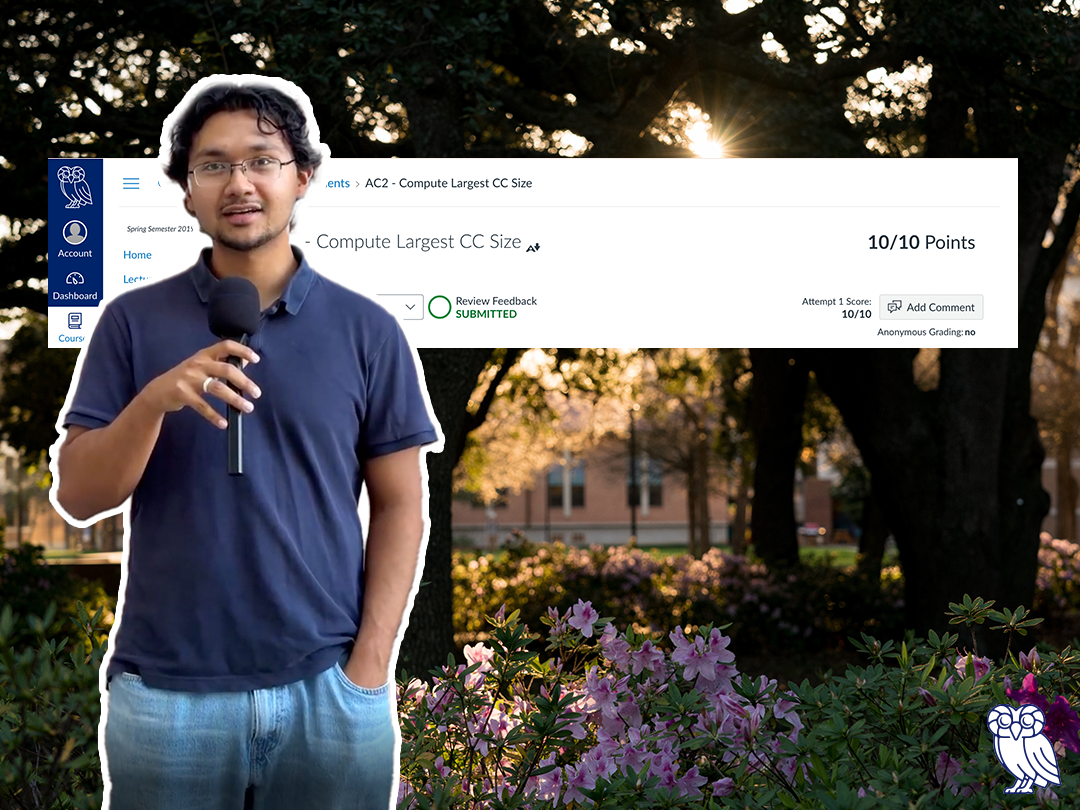
Taking a course online can open doors that a traditional schedule simply doesn’t—whether you’re a Rice undergraduate fitting a challenging class into a tight degree plan or a professional starting a graduate program without stepping away from a full-time job. This flexibility is central to the online programs at Rice University.
But for current and prospective students asking, "Are Rice online classes and degree programs easier?," the clear answer from current online students is absolutely not.
Students in Rice’s online master’s and undergraduate summer classes consistently describe their online courses as flexible and academically demanding, maintaining the same high expectations as on-campus classes. When asked what advice they would share with someone considering their first online course at Rice, they offered five key strategies for successfully managing a rigorous workload.
Key 1: Be Honest About Your Time and Online Course Load
The first and most critical piece of advice students share for success in Rice’s online programs and classes is simple: plan for a full, rigorous Rice-level course—not an “extra” you can fit in casually.
Abbie Wang, a undergraduate biosciences major, took an online Organic Chemistry course over the summer to stay on track in her degree plan. While she was glad she took the leap, her advice to other students is to be very careful about capacity.
“I would just make sure that they’re not taking more than one course, especially if it’s something as content-heavy as Organic Chemistry… even if it’s your only class, it might be a lot. So don’t put too much on your plate,” says Wang.
Her experience reflects what many students have shared: it’s easy to underestimate how quickly an online course moves. Having a realistic picture of the time and effort required up front can make the difference between simply enrolling and truly keeping up with your studies.
Key 2: Treat Your Online Class Like an Appointment with Yourself
Online courses and degree programs are designed to give students maximum control over when and where they learn. The students we spoke with emphasized that this freedom works best when you treat the class like a real, scheduled appointment, not a task you’ll perpetually “fit in later.”
Structuring Your Time for Online Degree Success
Students shared the following best practices for time management:

Block your calendar. Schedule regular, dedicated times for watching lectures, working on problem sets, and preparing for exams.
Lean on self-discipline. Teagan Jones, a recent graduate of Rice’s Online Master of Data Science (OMDS) program, notes that the program is an excellent option for those with strong self-discipline.
Be ready to adjust. Jones admitted she had to quickly recalibrate her time management after her first term, noting, “I was very humbled. My first semester of this program [I] took nine hours.”
Recognize that time management is key. For those considering a challenging online degree like the OMDS, Jones emphasizes that the program suits students who want to be pushed academically and possess excellent time-management skills.
Key 3: Expect a Rice-Level Challenge—With Rice-Level Support
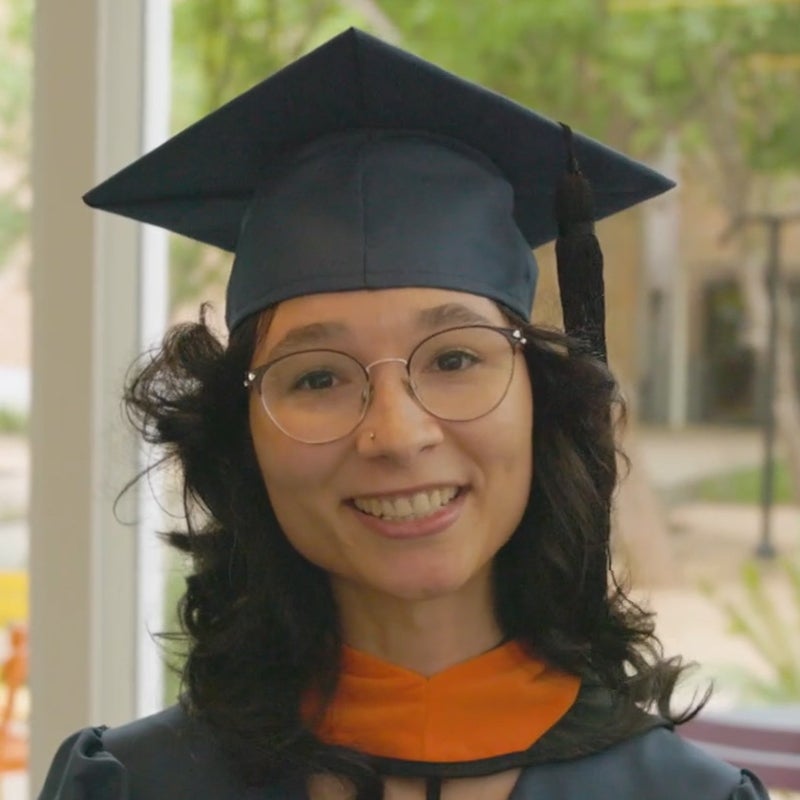
If you enroll in online classes at Rice, you should anticipate Rice-level rigor. Students who have experience in both online and in-person graduate programs confirm that the online courses felt just as challenging as any on-campus offerings.
Danielle Rossi, a recent graduate of the Online Master of Data Science (OMDS) program, appreciated the flexible structure.
“There were several times that [the program] worked with my schedule, which made it... feasible to actually make those classes,” Rossi said.
She found the combination of live virtual sessions and independent, asynchronous work demanding but manageable because of the structure.
The Power of Asynchronous Learning in Online Programs
Rossi pointed out the major benefit of the asynchronous component of her online degree program sharing that flexibility allowed her to handle her high-level academic commitment from home:
“The asynchronous part of the program where you can do your assignments on your own time makes it a lot easier to juggle than… a traditional, in-person program. Being able to be in the comfort of my home and do those things on my own time made it a lot easier to handle,” Rossi said.
Online courses at Rice are designed with built-in support, including clear syllabi, predictable weekly structures, and regular instructor communication. Students advise leveraging this support early—read ahead, check course sites often, and reach out immediately when something isn’t clear.
Key 4: Use Flexibility to Support Your Life, Not to Procrastinate

The same flexibility that makes online courses attractive can also make it tempting to delay assignments. Students urge future online learners in Rice University online programs and classes to use that flexibility with intention.
For undergraduate student Karlianna Kapche, the online format opened up life opportunities, allowing her to take her online classes during the summer (Organic Chemistry and Physics) while traveling with her family.
“I was able to do physics while in New York and [experience] a lot of amazing restaurants and places, the Empire State Building, Statue of Liberty,” Kapche shared, adding that the design of the online course provided both the needed support and the opportunity to learn on her own time.

Similarly, graduate students in online master’s programs leverage flexibility to balance work and studies:
Javier Castellanos, a recent graduate of the Online Master of Data Science program, was a full-time employee throughout his studies. Flexibility meant being able to choose course sections and schedules that fit around his job, ensuring he could complete the work without compromise.
“Ever since I started the program, I’ve been a full-time employee, and each term I’ve had opportunities to either take another class or choose a different schedule for the same course,” Castellanos said.
Key 5: Stay Connected to People, Not Just Content
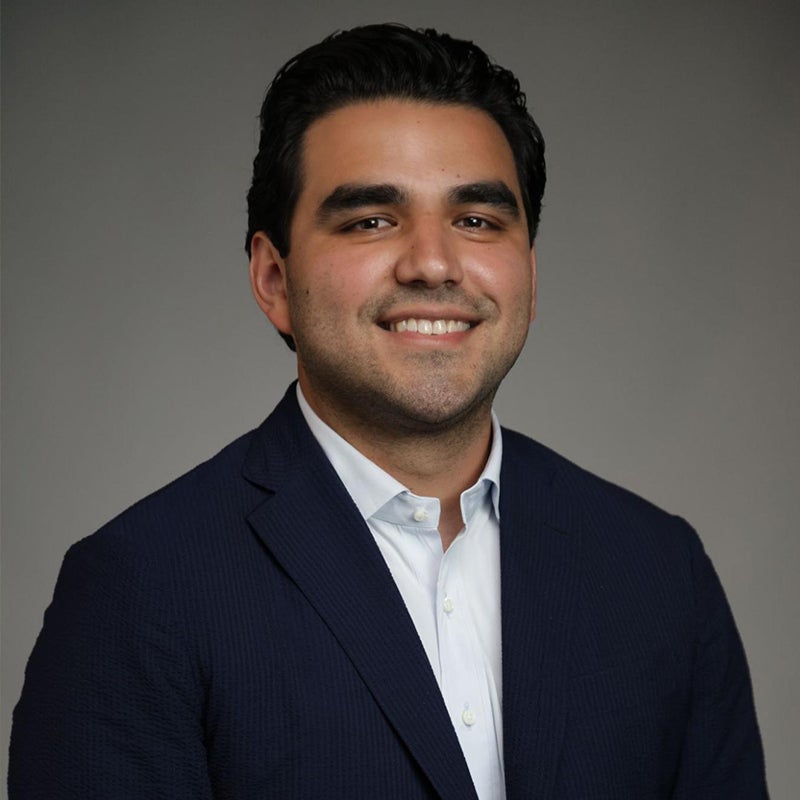
Students emphasized that an online class at Rice does not have to feel isolating. Taking online courses allowed students like Kapche to travel the country while still taking classes and feeling connected to a learning community.
Tyler Aguilar, a recent graduate of Rice’s Online Master of Data Science (OMDS) program, noted that the OMDS program offers the ability to blend online flexibility with family-friendly in-person experiences on campus, like attending games.
“The flexibility of an online program really is more valuable than anything when you have a family,” Aguilar stressed.
His experience shows that having the option to attend class online or in-person affords the best of both worlds.
Tips for Building Community in Your Online Degree Program
Students encourage future learners to:
- Introduce yourself in class forums.
- Join or start group chats.
- Attend live sessions.
These simple steps make it easier to stay on track and feel like an integral part of the Rice community.
What Successful Students Wish They’d Known

When asked what they wish they had known before starting an online course or online degree program, students consistently returned to a few core themes, providing actionable takeaways for prospective online learners:
- Plan your time as if the online course were in person.
- Be realistic about how many courses you can handle at once.
- Start assignments earlier than you think.
- Communicate with instructors before you fall behind.
- Treat flexibility as a tool to help you succeed.
As current Online Masters of Computer Science (OMCS) student Daniel Richards concluded, the message is clear:
“Have your ducks in order… before you decide to add another thing to the mix,” Richards said.
For students ready to commit the time and effort, online courses and online degrees at Rice offer a way to continue learning at a high level while staying rooted in the people and responsibilities that matter most.
If you’re considering an online course or program at Rice, you can explore current offerings and learn more about what to expect at Rice Online Learning. Advisors and enrollment coaches can also help you think through which courses fit your goals and schedule.
Prospective online graduate students interested in speaking with an enrollment coach can complete this form, and a member of our team will soon be in touch.